

Online cinema
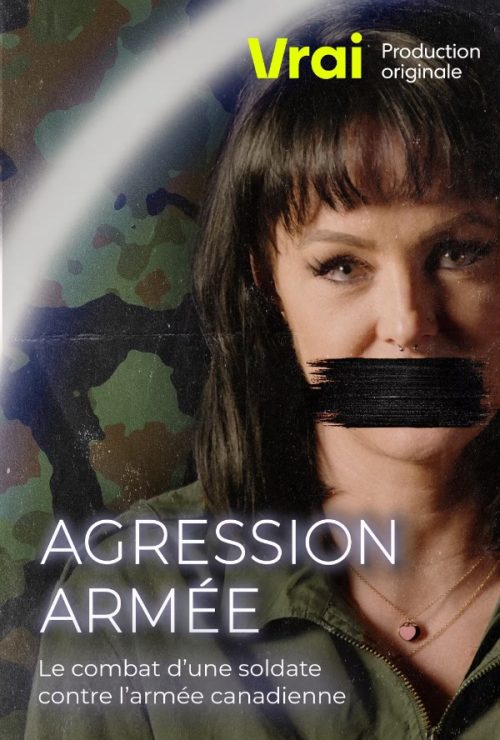
Agression armée

Gaëlle D’Ynglemare
After being assaulted by her superior officer, former soldier Stéphanie Raymond fought for 10 years to have charges pressed and her attacker punished for his crime. Through the story of this young woman, as well as many other testimonies, this documentary paints a striking portrait of the Canadian armed forces and the culture of sexual misconduct that reigns there.
Émergence

Clarissa Rebouças
Katiana emerges. She finally gets her head above water and speaks up for all Haitian women.

Cachez cette bedaine que je ne saurais voir
Karyne Lemieux
Being an artist, a woman, an actress, and… pregnant, is it good or bad news? A tricky question because the number of atypical workers is constantly growing these days. The answer to this question bears witness to a precarious reality that is brought to light in this film documentary. The actresses and artists are a starting point to talk about women’s place and maternity in today’s world.
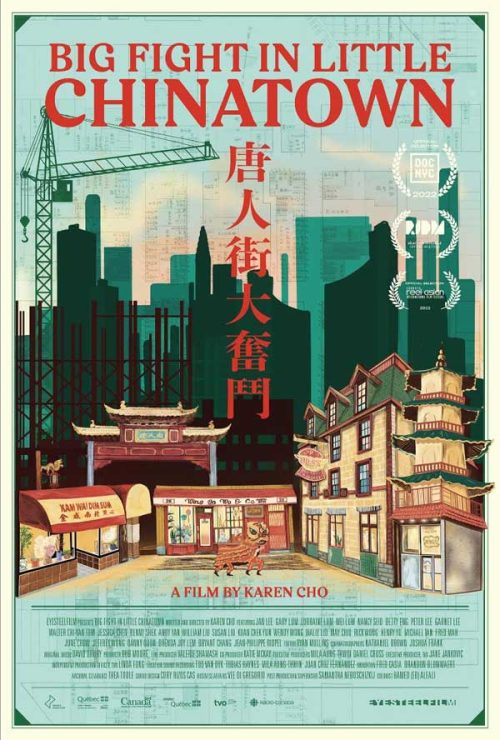
Big Fight in Little Chinatown
Karen Cho
Big Fight in Little Chinatown is a story of community resistance and resilience. Set against the backdrop of the COVID pandemic and an unprecedented rise in anti-Asian racism, the documentary takes us into the lives of residents, businesses and community organizers whose neighbourhoods are facing active erasure. Coast to Coast the film follows Chinatown communities resisting the pressures around them. From the construction of the world’s largest vertical jail in New York, Montreal’s fight against developers swallowing up the most historic block of their Chinatown, big box chains and gentrification forces displacing Toronto’s community, to a Vancouver Chinatown business holding steadfast, the film reveals how Chinatown is both a stand-in for other communities who’ve been wiped off the city map, and the blueprint for inclusive and resilient neighbourhoods of the future.

L’audience
Émilie Beaulieu-Guérette
Peggy Nkunga Ndona
After crossing 11 countries irregularly to seek asylum in Canada, Peggy, Simon and their 3 children are waiting for the hearing that will determine whether they get refugee status or not. Having fled political repression in the Democratic Republic of the Congo, the family tries to rebuild a peaceful life in Montreal, in spite of the constant threat of deportation. Between ghosts from the past, hopes for the future and a complex legal maze, the film delves into the struggle of the Nkunga Mbala family to get legal status. The film sheds light on the complex process of asylum seeking in Canada.

Manufacturing The Threat
Amy Miller
Shining a light into the murky world of police infiltration, incitement, and agent provocateurs, Manufacturing The Threat shows how Canada’s policing and national security agencies, granted additional powers after 9/11, routinely break laws with little to no accountability or oversight. For the first time ever, a feature-length documentary is examining the issue of agent provocateurs and entrapment in Canada’s national security apparatus. Manufacturing the Threat is a thrilling and emotional film, which examines a deeply disturbing episode in Canadian history when an impoverished couple was coerced by undercover law enforcement agents into carrying out a terrorist bombing. Further, viewers learn that this case is far from unique in the context of Canadian intelligence.

Après coups
Romane Garant Chartrand
Within the walls of a women’s shelter, a talking circle unmasks domestic violence to help women regain their dignity and power to act. In a powerfully empathetic cinematic gesture, Afterwards creates a space for sharing and sisterhood, like a choral ensemble breaking down the walls of silence.
Ma traversée
Diana Goudrouffe
A personal quest filmed over 20 years, the film recounts the racial issues linked to the notion of white privilege that have punctuated the director’s life in three French-speaking societies: Guadeloupe, France and Quebec. From her own story emerges a broader narrative of colonization, assimilation, integration and the social advantages linked to ethno-racial origin, and their impact to this day.

Les jours heureux
Chloé Robichaud
Emma is a young conductor and rising star on the Montreal scene. Happy Days chronicles her complex relationship with her father and agent Patrick, who has maintained a devious hold over her since childhood. The possibility of obtaining an important position within a prestigious orchestra only increases the stakes for Emma. She will have to give way to her true emotions and make choices, as much for her music as for herself, if she wants to successfully navigate her career and her romantic relationship with Naëlle, a newly separated cellist and mother of a boy.
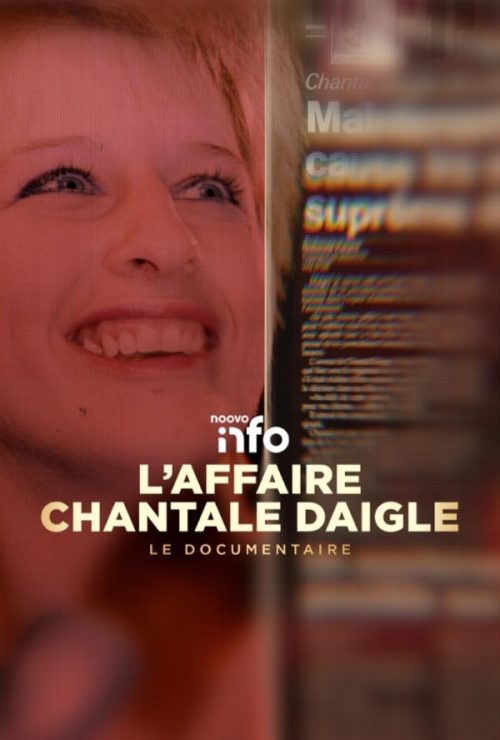
L’affaire Chantale Daigle: le documentaire
Gaëlle D’Ynglemare
L’affaire Chantale Daigle immerses us back into the saga that captivated the country during the summer of 1989, meticulously retracing its events and twists alongside the feminist activists who supported and accompanied Chantale Daigle during these pivotal and fundamental months for abortion rights in Canada.
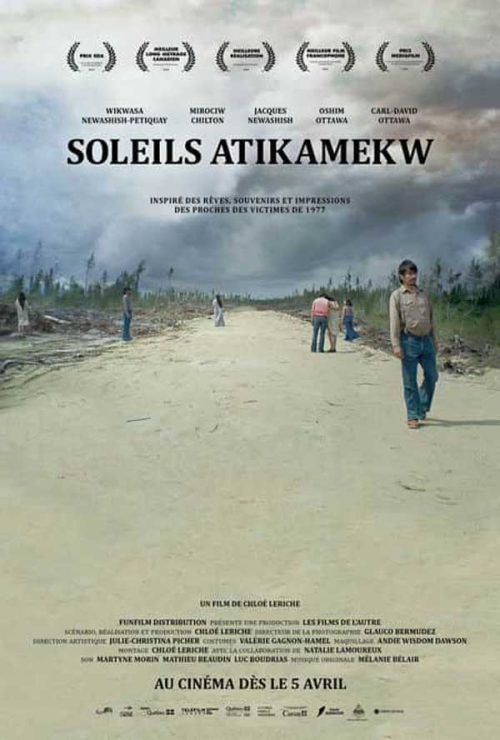
Soleils Atikamekw
Chloé Leriche
Manawan 1977. A vehicle falls into a river near a Native community. Two white Quebecers escape, but five Atikamekw lose their lives. While the police conclude that it was an accident, the families of the victims have unanswered questions. A choral film, historical narrative and poetic tale, Soleils Atikamekw is freely inspired by the dreams, impressions and memories of the victims’ relatives. Reality and fiction come together in a moving film about grief, injustice and memory.
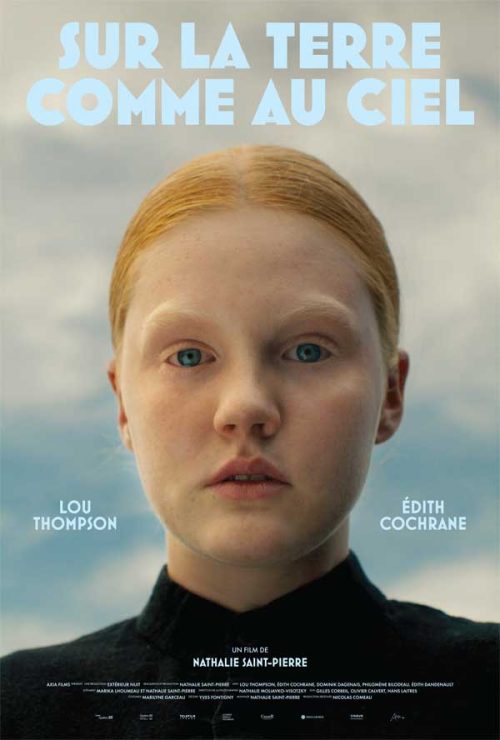
Sur la terre comme au ciel
Nathalie Saint-Pierre
Two young sisters – Clara and Sarah Gagnon – have always lived in the countryside with their parents, in a Christian community cut off from the world. The day Sarah suddenly disappears, Clara falls apart. Convinced that she knows where her sister is hiding, Clara runs away too, in the hope of bringing her back to “the straight and narrow”. Clara arrives in Montreal at the home of her unknown Aunt Louise, only to discover to her horror that her sister is not there. When her aunt tells her that she’s about to leave on vacation, Clara realizes that she only has ten days to find her sister. As she searches the city, Clara discovers the world, doubt and the price of freedom.

La vie continue
Vanessa Boisset
Cancer is a disease that affects us all. From near or far. An aunt, a friend, a father, a colleague, or yourself… In Quebec, on average, someone is diagnosed with cancer every 8 minutes. As a woman, mother and cancer survivor, Vanessa Boisset takes you on a journey to discover the most recent and promising advances in screening, treatment and patient well-being for six of the most deadly cancers. All hope is possible!

Innover durablement
Vanessa Boisset
Innovation! What about our environmental and social impact? Today, Quebec benefits from an abundance of sustainable innovations created by local researchers and companies that contribute to the development of a circular economy. Whether in the brewing, construction, fashion and textile, health care, fuel or fishing industries, host Lili Boisvert goes to meet them.
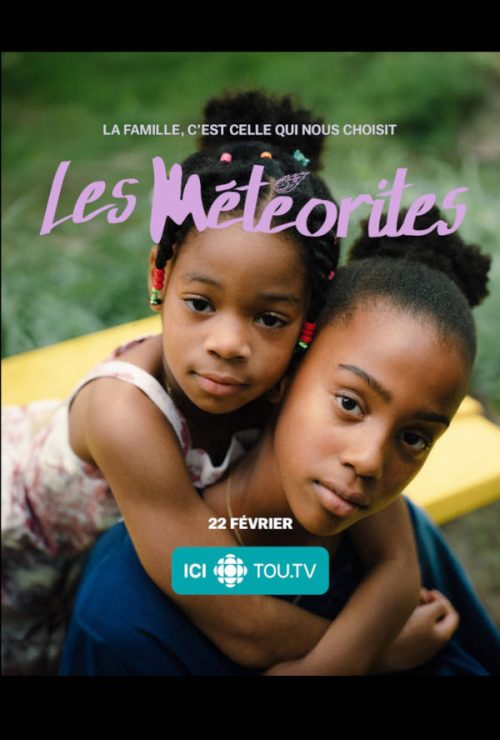
Les météorites
Nadia Louis-Desmarchais
In the heart of the 2000s, Léna and Maëlle, two little black girls, live with a large, loving white foster family, whose upheavals we follow through their luminous eyes.

Les femmes de Raël
Érika Reyburn
Les femmes de Raël takes us inside the world of a sectarian group. Two women who have spent a large part of their lives in the Raelian movement have agreed to testify, not so much to denounce Rael as to show how normal, well-educated women can get caught up in such an entanglement, how one comes to follow a guru and how a guru becomes a guru.
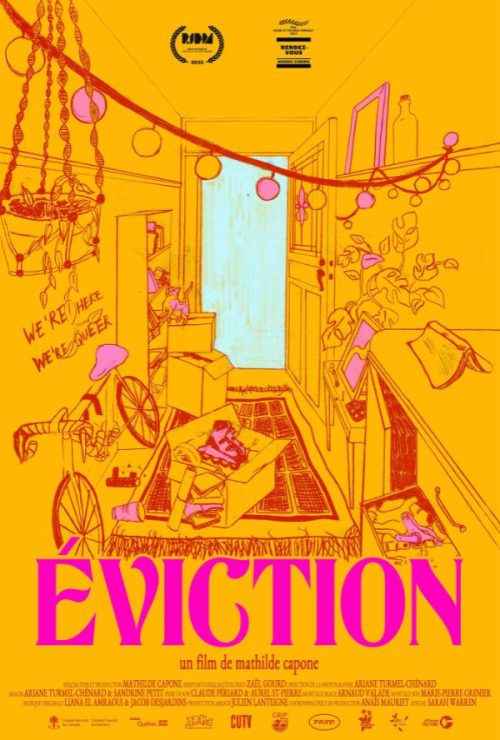
Éviction
mathilde capone
Since 2010, Parthenais has held within its walls the life of a whole queer community. They are gay, lesbian, trans, and they live together in Centre-Sud in the heart of Montreal, in a triplex that is falling apart. Between the parties that sometimes welcome more than two hundred people until the wee hours of the morning, the collective dinners, the great joys and the small despairs, this old flat has transformed the lives of its tenants. Twelve years later, the building is bought by a wealthy family who wants to live there, gentrification being the order of the day. This marks the end of a mythical space that has transformed Montreal’s queer scene for a decade. The boxes are too small to contain all the stories that have taken place within these walls. Eviction is the story of this turning page, as the distraught residents search for a new place to call home in the midst of a housing crisis and land speculation.
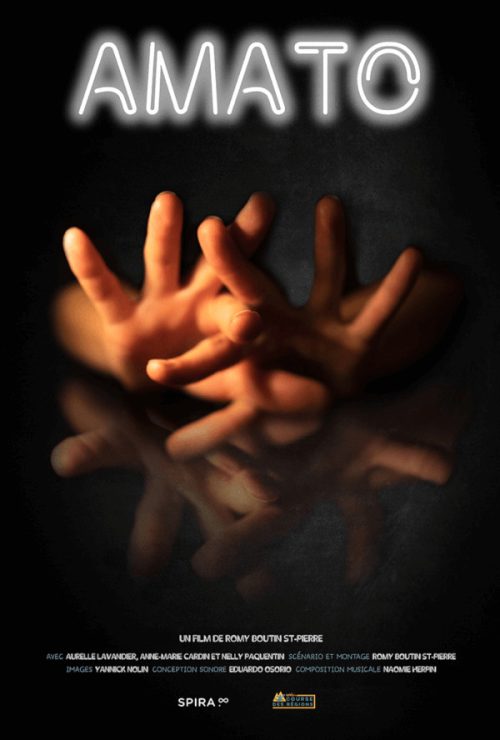
Amato
Romy Boutin St-Pierre
Amato is about the diversity of polyamorous models in the Quebec landscape. Three unique and interrelated stories are staged through performing arts.
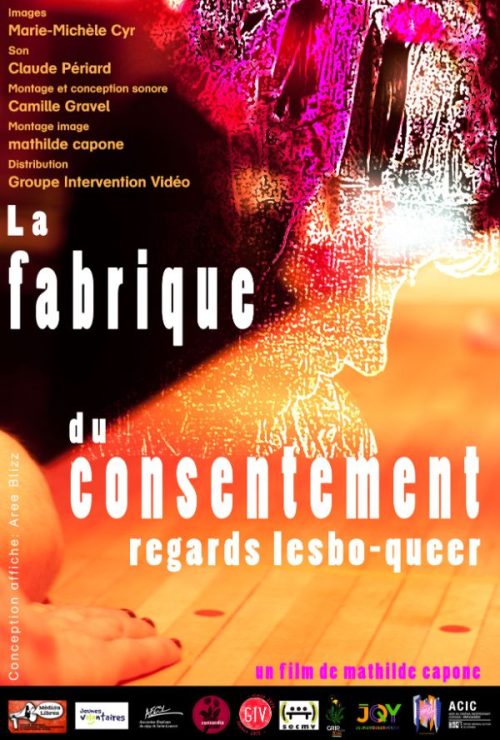
La fabrique du consentement: regards lesbo-queer
mathilde capone
What if lesbo-queer communities had something to share about the singularities of their sexualities? Through the complex topic of consent, sixteen protagonists from these communities speak up. Could there be blurred lines, a continuum between consent and aggression? How can we defeat rape culture and innovate in matters of consent? How has the notion of aggression been used historically to exclude trans women? In a deep introspection of their intimacies, these protagonists ask questions, get angry, laugh, create other possibilities. They suggest to look more closely at consent, from the experience of their marginalized communities, their subcultures and their explorations.

Contes d’une grossophobie ordinaire
Josiane Blanc
What is fatphobia and what can be done to overcome it? With poetic illustrations and painful, compelling testimony, Tales of Ordinary Fatphobia offers multiple examples of the psychological effects of weight-based discrimination and bullying on adolescent girls.

Date limite
Josiane Blanc
On the morning of their first anniversary, Julien and Camille must make the decision of their lifetimes: which one leave everything behind and follow the other to their home country?
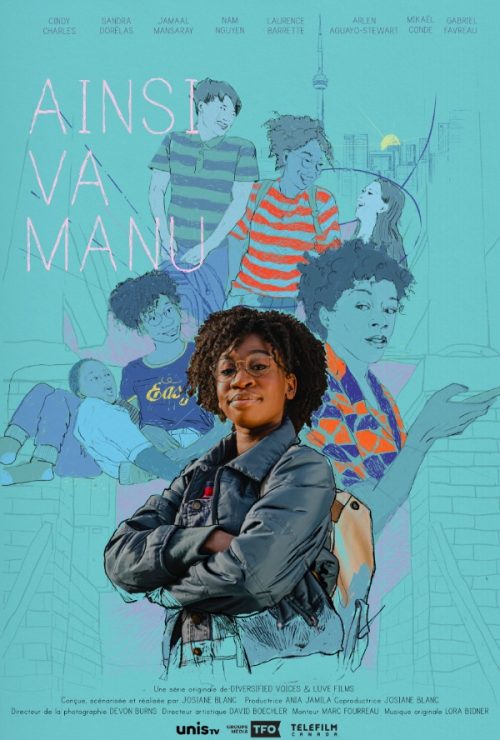
Ainsi va Manu – Saison 1
Josiane Blanc
The story follows the journey of a single-parent family, coping with Toronto’s increasing housing precariousness. When Manuela,16, and her family are threatened to be evicted from their apartment by a real estate developer, she decides to fight back, in hopes of remaining in her neighbourhood.
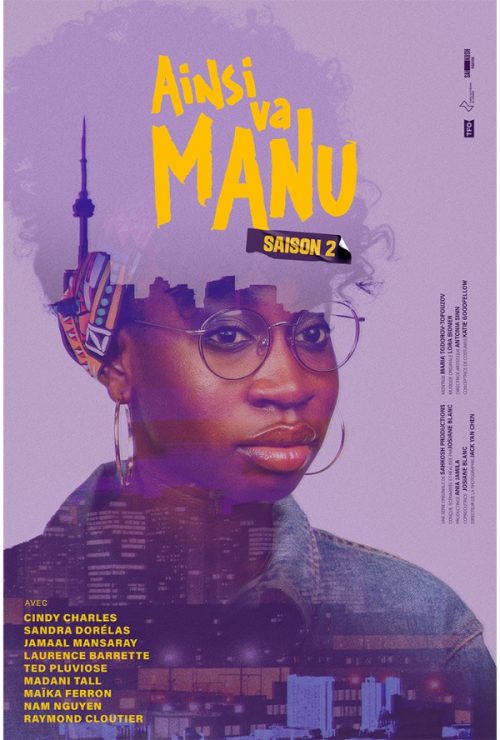
Ainsi va Manu – Saison 2
Josiane Blanc
Forced to leave her hometown temporarily, Manu finds it hard to adapt to her new surroundings. She has only one thing on her mind: moving back to Toronto. However, an unexpected encounter turns Manuela’s life upside down, calling into question everything she’s known and wanted up to now.

Vous n’êtes pas seuls
Marie-Hélène Viens
Leo, a lonely, anxious pizza delivery guy, stumbles upon John, a mysterious taxi driver seeking lonesome souls. This unusual encounter throws the young man into a dizzying delirium, disrupting his blossoming romance with Rita. As the leaves start falling from the trees, days are getting shorter, and the cold is settling in… Luckily, the first flames of love warm Leo’s heart. But beware: if you play with fire, you might get burned.