

Online cinema

Oh la la du narratif

Sylvie Laliberté
This is the story of a love story. Often we think that love stories are lived in a lying position, very very lying. But no, love is lived standing up. So I tell it with both feet in the snow. I play with and within the limits of the screen to translate how much love tends towards freedom. Even when it is a captive story of its history and its form, here the video.
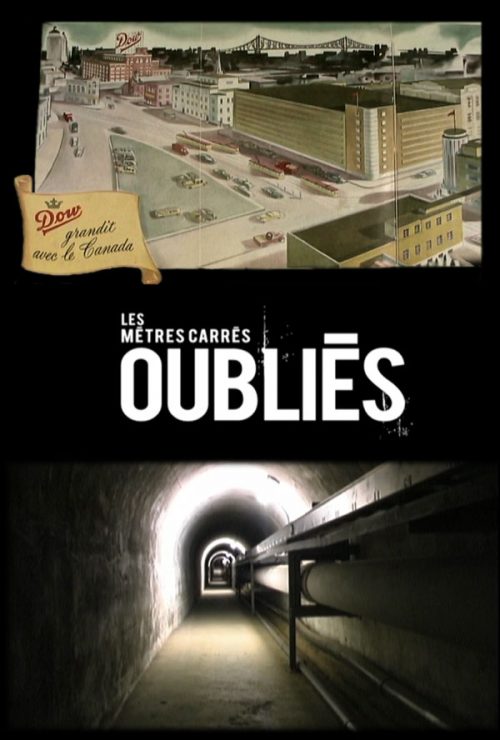
Les mètres carrés oubliés

Marie-Geneviève Chabot
Une usine désaffectée de Montréal, l’ancienne Brasserie Dow, se raconte à travers les visites de quelques explorateurs urbains.
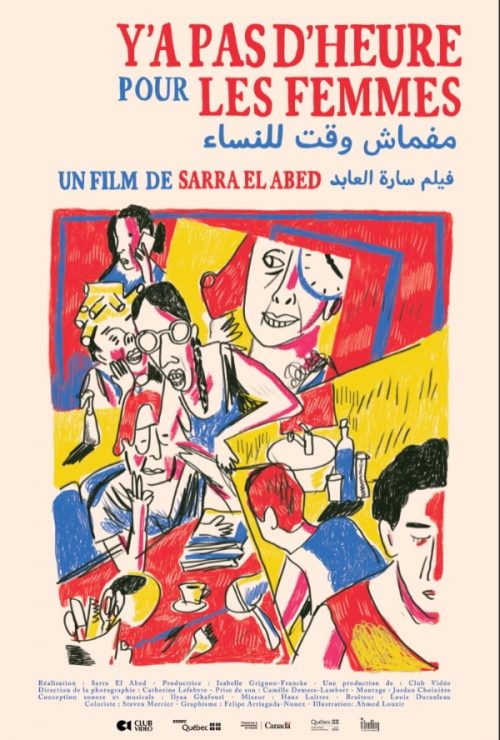
Y’a pas d’heure pour les femmes
Sarra El Abed
Sarra El Abed finished her degree in film direction at UQAM in 2018, where she was awarded the best fiction prize for her graduation project. Ain’t no time for women is her fourth film. Flirting between fiction and documentary filmmaking, she likes to breathe whimsy into the ordinary and comedy into dramatic situations.
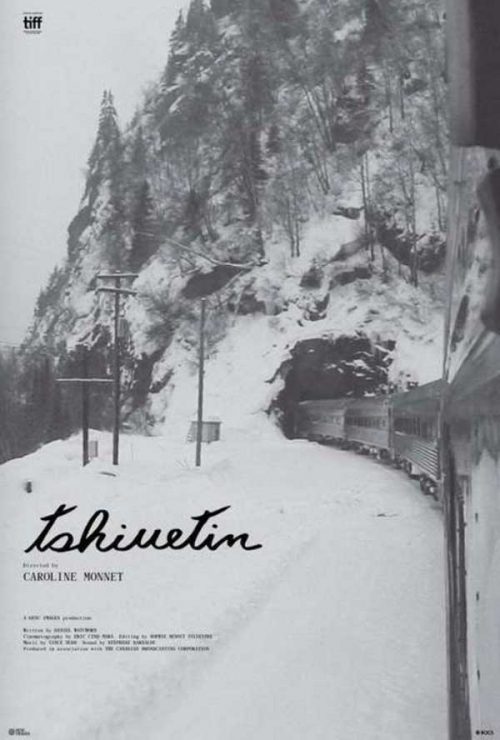
Tshieutin
Caroline Monnet
Take a ride through Northern Quebec and Labrador on Canada’s first First Nations-owned railway. The Tshiuetin train line extends 132.5 miles from Emeril, Labrador to Schefferville, Quebec. The majority of passengers on the train travel regularly for work and family engagements, using the railroad because road and air transport isn’t possible in the region– a unique reality that highlights the challenges faced by so many northern communities today. The Tshiuetin line is a testament to the viability of a business run by First Nations; one that combines local economic benefits with respect for the cultural and linguistic heritage of those who routinely use this service.
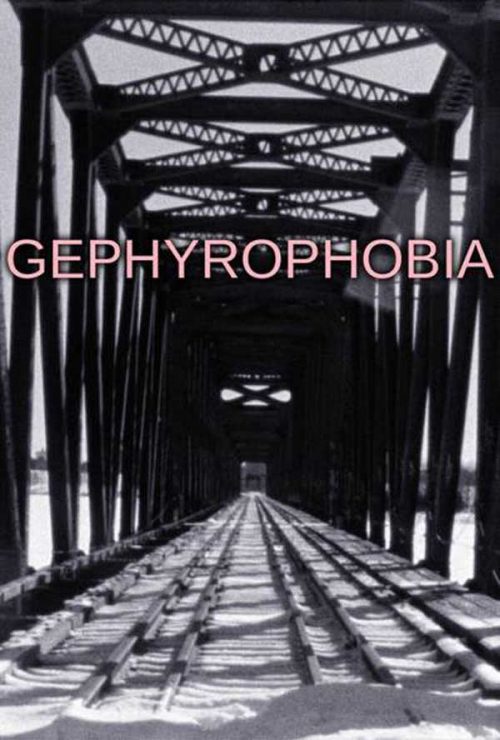
Gephyrophobia
Caroline Monnet
The Gatineau-Ottawa region is marked by the daily struggles between these two neighbouring communities, whose cultural, political and linguistic traditions differ. The film Gephyrophobia, an English word for the phobia of bridges, is a film about movement, landscape, and the tension between two distinct identities whose common border is the Ottawa River.
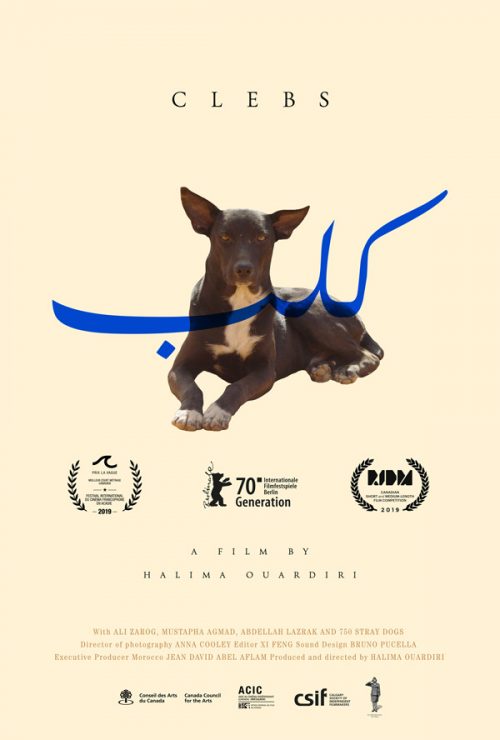
Clebs
Halima Ouardiri
In a stray-dog refuge in Morocco, time seems to stand still for the 750 animals waiting to be adopted, their lives following a precise, monotonous routine.
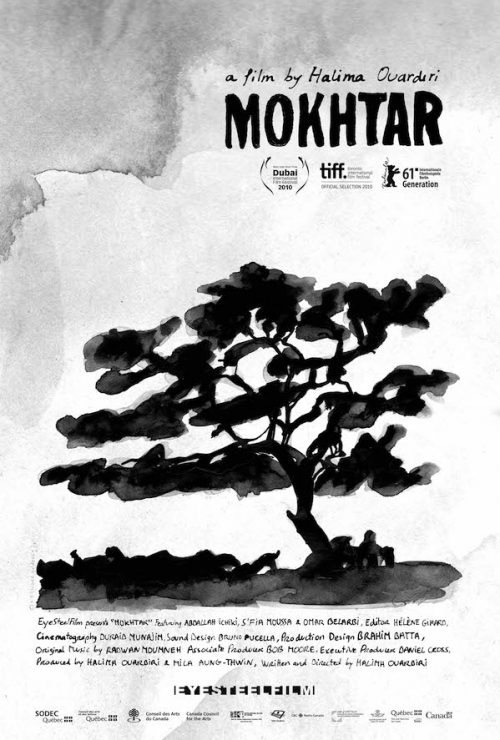
Mokhtar
Halima Ouardiri
Based on a true story, Mokhtar recounts the tale of a young boy who lives with his family of goatherds in a remote, Moroccan village. One day, the boy finds a fallen owl and decides to keep it, despite the fact that the owl is considered a bad omen. Mokhtarʼs new pet becomes a symbol of rebellion against his family and an icon of his fledgling independence. Kinship, religion and spirituality are all confronted in this film that celebrates inner and outer strength.
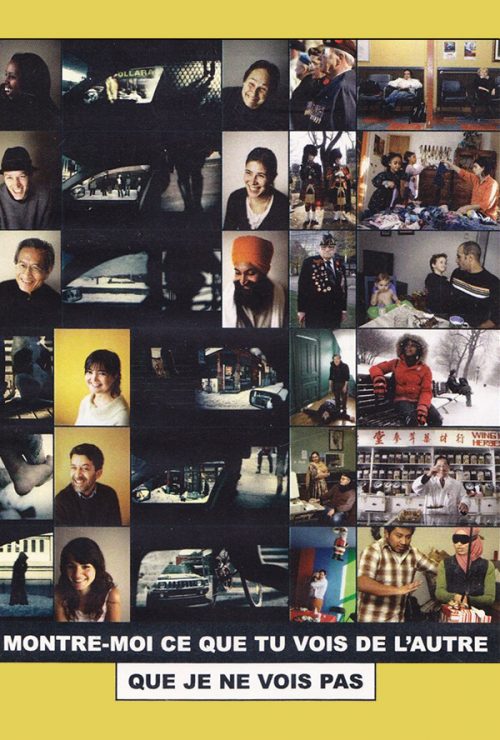
Montre-moi ce que tu vois de l’autre que je ne vois pas – Roger Sinha
Johane Bergeron
A series of newspaper articles from here and elsewhere serve as a starting point for an intimate conversation between Alexandre Da Costa (violinist), Tania Kontoyanni (actress), the late Jean-Guy Moreau (humorist), Maria Mourani ( criminologist) and Roger Sinha (choreographer), who lent their voices to the reading of certain extracts from these articles. From various origins and backgrounds, they thus achieve five different perspectives, five different ways of seeing and experiencing current cultural diversity.
Montre-moi ce que tu vois de l’autre que je ne vois pas – Feu Jean-Guy Moreau
Johane Bergeron
A series of newspaper articles from here and elsewhere serve as a starting point for an intimate conversation between Alexandre Da Costa (violinist), Tania Kontoyanni (actress), the late Jean-Guy Moreau (humorist), Maria Mourani ( criminologist) and Roger Sinha (choreographer), who lent their voices to the reading of certain extracts from these articles. From various origins and backgrounds, they thus achieve five different perspectives, five different ways of seeing and experiencing current cultural diversity.
Montre-moi ce que tu vois de l’autre que je ne vois pas – Maria Mourani
Johane Bergeron
A series of newspaper articles from here and elsewhere serve as a starting point for an intimate conversation between Alexandre Da Costa (violinist), Tania Kontoyanni (actress), the late Jean-Guy Moreau (humorist), Maria Mourani (criminologist) and Roger Sinha (choreographer), who lent their voices to the reading of certain extracts from these articles. From various origins and backgrounds, they thus achieve five different perspectives, five different ways of seeing and experiencing current cultural diversity.
Montre-moi ce que tu vois de l’autre que je ne vois pas – Tania Kontoyanni
Johane Bergeron
A series of newspaper articles from here and elsewhere serve as a starting point for an intimate conversation between Alexandre Da Costa (violinist), Tania Kontoyanni (actress), the late Jean-Guy Moreau (humorist), Maria Mourani ( criminologist) and Roger Sinha (choreographer), who lent their voices to the reading of certain extracts from these articles. From various origins and backgrounds, they thus achieve five different perspectives, five different ways of seeing and experiencing current cultural diversity.
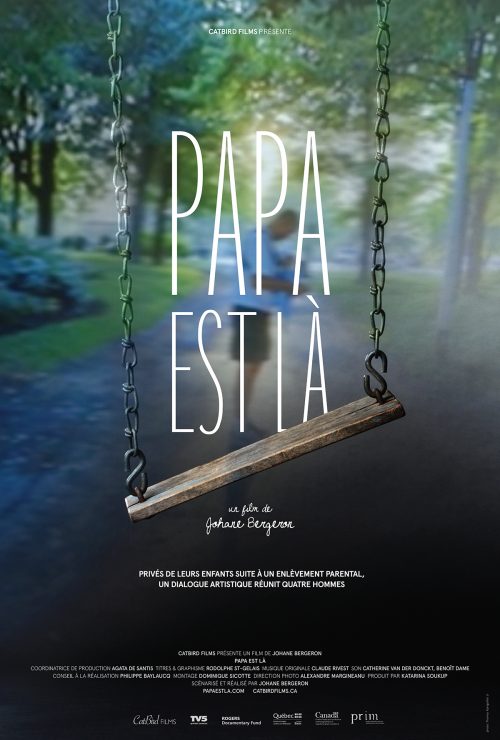
Papa est là
Johane Bergeron
Thomas, a photographer, suddenly loses contact with his son following a parental abduction. To deal with his grief and attempt to understand what has befallen him, Thomas embarks on an artistic project to make portraits of Pierre, Ricardo and Tony, three fathers in the same situation as himself.