

Online cinema
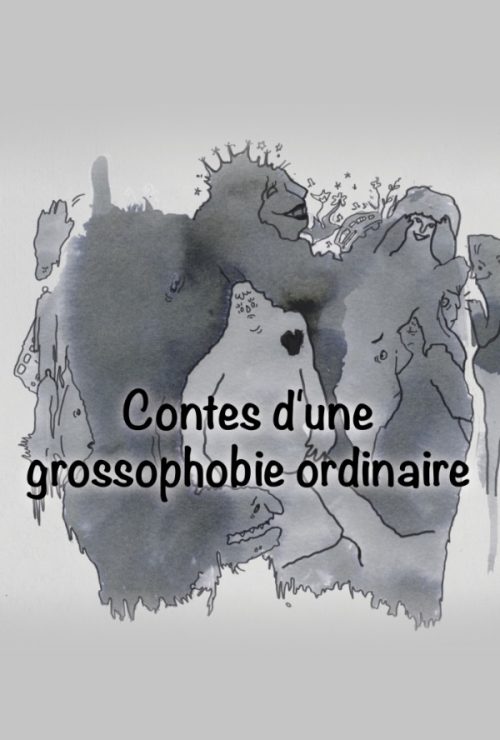
Contes d’une grossophobie ordinaire

Josiane Blanc
What is fatphobia and what can be done to overcome it? With poetic illustrations and painful, compelling testimony, Tales of Ordinary Fatphobia offers multiple examples of the psychological effects of weight-based discrimination and bullying on adolescent girls.

Faux départ
Josiane Blanc
Young, career-minded, and ambitious, Roselyne and Adam have difficulty finding time for their relationship in their overloaded and always hectic schedule. When the two finally decide to spend time together, an unexpected visit complicates their plans.
La grande chasse
Laetitia Demessence
In an isolated rural village, local militias are forcing a couple of horse breeders off their land. The couple must decide whether to leave, or stay and resist their oppressors.

Les mots d’amour
Laetitia Demessence
A woman is trapped in solitude. Alone in a world without human connections, she finds refuge in the mysterious companionship of her feathered neighbors. Her desperate longing for love transforms into an obsession, blurring the line between reality and illusion.

Magma
Marlène Gaudreau
Plunged into a world that oscillates between dream and nightmare, He must confront the red hold that pursues him.

Asbestos
Vanessa Gauvin-Brodeur
Once a prosperous community, the small town of Asbestos, Quebec, bears the physical and psychological scars of its past, heavily rooted in the asbestos mining industry. As the village prepares to change its name in an attempt to reframe its history, three former miners reflect on the rise and fall of their town.Through reminiscence and introspection, they pay homage to their heritage, make amends with the present, and anchor themselves in the optimism of a new future — both to heal and change the perceptions and stereotypes of their community.

Amato

Romy Boutin St-Pierre
Amato is about the diversity of polyamorous models in the Quebec landscape. Three unique and interrelated stories are staged through performing arts.
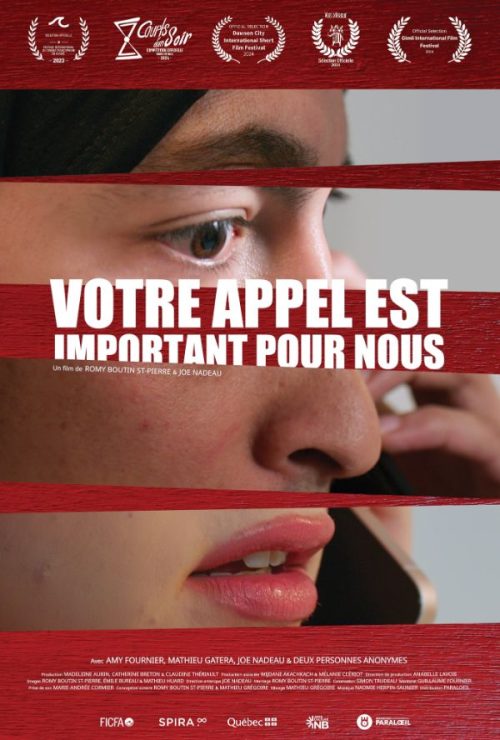
Votre appel est important pour nous
Romy Boutin St-Pierre
Five people call various Canadian government departments in the hope of getting answers to their bureaucratic problems. On the other end of the line, they are met with a rigid automatic voice, a long waiting music, workers guided by subconscious biases from an institution machine, built around systematic discriminations.
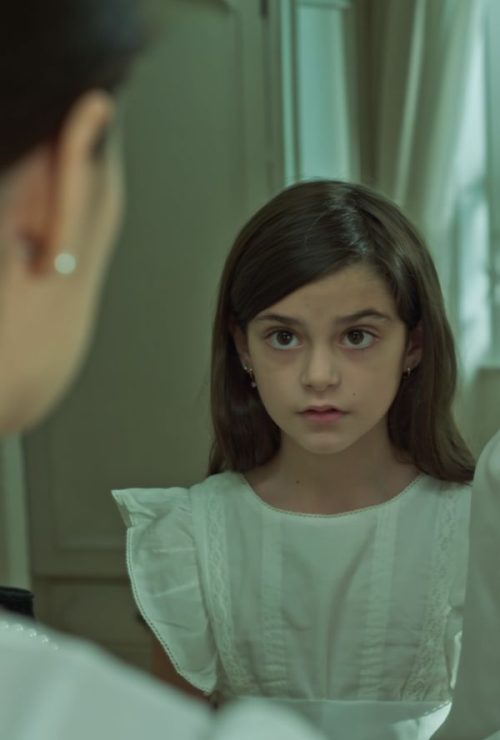
Like you
Romy Boutin St-Pierre
Once upon a time, there was a beloved princess… or a neglected child creating an imaginary world in her mind in an attempt to resemble her mother, who is both victim and aggressor in her tumultuous relationships.
Comme toi
Romy Boutin St-Pierre
Once upon a time, there was a beloved princess… Or a neglected child creating an imaginary world in her mind in an attempt to resemble her mother, who is both victim and aggressor in her tumultuous relationships.
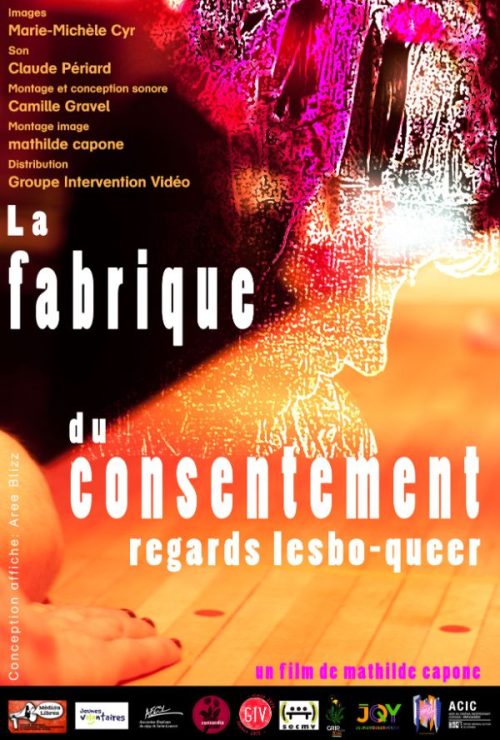
La fabrique du consentement: regards lesbo-queer
mathilde capone
What if lesbo-queer communities had something to share about the singularities of their sexualities? Through the complex topic of consent, sixteen protagonists from these communities speak up. Could there be blurred lines, a continuum between consent and aggression? How can we defeat rape culture and innovate in matters of consent? How has the notion of aggression been used historically to exclude trans women? In a deep introspection of their intimacies, these protagonists ask questions, get angry, laugh, create other possibilities. They suggest to look more closely at consent, from the experience of their marginalized communities, their subcultures and their explorations.

Dis-moi pourquoi ces choses sont si belles
Lyne Charlebois
Brother Marie-Victorin (Le Jardin Botanique, La Flore Laurentienne) was 46 when he met 23-year-old Marcelle Gauvreau. Both have been close to death and share the same love of God and Nature. He becomes her teacher, later she becomes his assistant. Their friendship evolves. Marie-Victorin offers Marcelle different readings on sexuality that she hastens to comment on from her own intimate experiences. In an epistolary exchange that will last until the death of Marie-Victorin, they explore human desires and “biology without a veil”. This great chaste love, the love of Quebec’s flora, pushes them to question their own relationship with love and Nature.